
Quick Answer: SSB psychology tests (PPDT, TAT, WAT, SRT, SDT) evaluate Officer-Like Qualities through projective, word association, and storytelling tasks. They are not pass/fail — assessors evaluate your personality, decision-making, leadership, and emotional control based on your responses. Preparation means understanding what each test measures and practicing authentic responses without over-thinking.

What Are SSB Psychology Tests?
The psychology tests at SSB are a 2-day evaluation conducted by military psychologists to assess personality traits, emotional maturity, decision-making ability, and leadership potential. Unlike written exams with right/wrong answers, psychology tests use projective techniques — your responses reveal how you think, react, and perceive the world.
These tests are NOT:
- IQ tests (though logical reasoning is evaluated)
- Personality disorder assessments
- Medical tests (that’s a separate medical examination)
- Pass/fail evaluations (you cannot “fail” a psychology test)
These tests ARE:
- Structured observations of how you respond to ambiguity and stress
- Evaluation of your leadership potential and emotional intelligence
- Assessment of your problem-solving and decision-making approach
- Judgment of your suitability for officer-level responsibility
The 5 SSB Psychology Tests Explained
1. TAT (Thematic Apperception Test)
| What It Is | Details |
|---|---|
| Duration | 12 minutes per story (12 pictures, 10 minutes + buffer time) |
| What You Do | View ambiguous pictures and create a story for each: “What led to this situation?” “What is happening?” “What will happen next?” |
| What They Measure | Imagination, narrative flow, emotional understanding, decision-making values, how you attribute success/failure, whether you see yourself as passive or active agent |
| Key Traits Revealed | Maturity, ambition level, attitude toward authority, empathy, problem-solving approach |
| Difficulty Level | Medium — requires structured storytelling |
TAT Strategy: Create stories where protagonists are proactive, morally upright, and action-oriented. Show that challenges are overcome through perseverance and integrity — not luck or help from others. Avoid violent, depressing, or self-defeating narratives.
2. WAT (Word Association Test)
| What It Is | Details |
|---|---|
| Duration | 15 seconds per word, 60 words total (15 minutes) |
| What You Do | Psychologist reads a word. You respond with the first word that comes to mind. Very quick — no time to think. |
| What They Measure | Authenticity (hence the speed), values, quick decision-making, attitude toward discipline/authority/weakness, whether you’re introspective or defensive |
| Key Traits Revealed | Integrity, honesty, emotional stability, leadership orientation, self-awareness |
| Difficulty Level | Hard — because you can’t plan. Your true personality emerges here. |
WAT Strategy: You cannot prepare for specific words. The key is authenticity. Respond naturally — the psychologist is listening for consistency with your TAT stories and GTO performance. If a word like “Weakness” comes up, respond with something real but show growth (e.g., “Impatience — which I’ve learned to manage”).
3. PPDT (Picture Perception and Description Test)
| What It Is | Details |
|---|---|
| Duration | 30 seconds to view, 4 minutes to write description, 5 minutes group discussion |
| What You Do | A blurry/ambiguous picture flashed for 30 seconds. You write what you saw and create a story (4 min). Then discuss with other candidates (5 min). |
| What They Measure | Observation skills, imagination, ability to handle ambiguity, communication, listening to others’ perspectives, how you influence a group without dominating |
| Key Traits Revealed | Team orientation, flexibility in thinking, persuasiveness balanced with humility, ability to accept feedback |
| Difficulty Level | Medium–High — tests both individual insight and group dynamics |
PPDT Strategy: See what others miss — the test values deeper observation. But in the group discussion, be open to alternative interpretations. Show leadership by listening, building on others’ ideas, and coming to a consensus. Don’t rigidly defend your version of the picture.
4. SRT (Situation Reaction Test)
| What It Is | Details |
|---|---|
| Duration | 30 minutes |
| What You Do | 30 situational scenarios (difficult situations, conflicts, ethical dilemmas). For each, write your reaction/action in 2–3 minutes. |
| What They Measure | Judgment under pressure, moral integrity, handling conflict, decision-making speed, maturity in problem-solving |
| Key Traits Revealed | Values, leadership philosophy, empathy, whether you blame others or take responsibility, conflict resolution style |
| Difficulty Level | Hard — tests real judgment |
SRT Strategy: Show maturity in every response. Never blame, never panic, never act impulsively. In each scenario: (1) understand the problem, (2) show concern for all parties involved, (3) propose rational action balancing duty and human values. Example:
Scenario: “Your best friend is caught cheating in the exam. What will you do?”
Immature response: “I’ll cover for him / I’ll report him.”
Mature response: “I’ll talk to him privately, help him understand why cheating is wrong, and encourage him to own his mistake to authorities. As a friend, I can’t enable dishonesty — that’s not real friendship.”
5. SDT (Story Discussion Test)
| What It Is | Details |
|---|---|
| Duration | 4–5 minutes (typically conducted after TAT) |
| What You Do | Psychologist selects one of your TAT stories and asks you follow-up questions about it. |
| What They Measure | Consistency of your thinking, how you handle challenge/questioning, depth of self-awareness, whether you can articulate your values, emotional stability under scrutiny |
| Key Traits Revealed | Defensive vs. open-minded, ability to reflect, genuineness of your stated values |
| Difficulty Level | Medium — challenging because it tests your sincerity |
SDT Strategy: Don’t over-explain or change your story. If the psychologist asks “Why did your protagonist act that way?” — answer honestly. If you said something in TAT that sounds made-up, the psychologist will notice in SDT. This is why authenticity matters.
What the Psychologist is Looking For
Across all 5 tests, military psychologists are evaluating 10 core Officer-Like Qualities (OLQs):
| OLQ | Revealed In Psychology Tests By |
|---|---|
| Officer-Like Qualities / Leadership | TAT, PPDT, GTO — your stories show initiative, willingness to take charge |
| Judgment & Decision Making | SRT, TAT — how you solve problems, prioritize |
| Integrity & Honesty | WAT, SRT, SDT — consistency across tests, authentic responses |
| Emotional Balance | WAT, SRT — how you handle stress or criticism without getting defensive |
| Initiative & Drive | TAT, SRT — protagonists in your stories are proactive, not passive |
| Awareness of Others (Empathy) | PPDT, SRT, TAT — you consider others’ perspectives and feelings |
| Willingness to Lead | PPDT group discussion, TAT stories |
| Realism & Adaptability | PPDT, SRT — balanced decision-making, not overly idealistic or cynical |
| Resilience | TAT, SRT — protagonists overcome obstacles, don’t give up |
| Stability Under Pressure | All tests — calm, articulate, thoughtful even when rushed |
10 Critical Tips for SSB Psychology Tests
1. Be Authentic, Not Perfect
Psychologists are trained to spot rehearsed, artificial responses. If your TAT stories sound movie-like or too polished, they’ll know you’re not genuine. Show your real thinking process — flaws and all.
2. Show Agency, Not Passivity
In TAT, SRT, and PPDT — your protagonist/response should show that you take action. Officers lead. Passive characters don’t get recommended.
3. Integrate Moral Values Into Every Response
Whether in TAT (how your protagonist wins) or SRT (how you handle conflict) — show that integrity and respect for others guide your decisions. Never suggest cheating, lying, or harming others as solutions.
4. In PPDT Group Discussion, Listen More Than Talk
Many candidates dominate and alienate the group. A real officer listens, builds on others’ ideas, and guides the group toward consensus. Show influence through wisdom, not volume.
5. WAT is Not About the “Best” Answer
There are no good/bad WAT answers. What matters is authenticity. If “Weakness” makes you think of “Impatience,” say it. Then follow up with how you’re working on it (shows growth mindset).
6. Don’t Over-Interpret Ambiguous Pictures (PPDT)
You see what the picture genuinely suggests to you. Psychologists know PPDT pictures are intentionally blurry. Don’t invent complex narratives — see what’s there.
7. In SRT, Show Maturity in Handling Conflict
The best responses involve dialogue, understanding, finding solutions that respect all parties. Never suggest aggressive, dismissive, or impulsive actions.
8. Consistency Across Tests is Critical
If you’re aggressive in TAT but calm in SRT, or self-directed in PPDT but indecisive in WAT — the psychologist will notice. Your personality should be consistently visible.
9. Never Defend a Wrong Answer in SDT
If the psychologist questions your TAT story and you realize it didn’t make sense, it’s okay to say “I see your point — I could have handled that differently.” Flexibility and self-awareness are positive traits.
10. Practise Under Timed Conditions
The speed and stress of SSB psychology tests is part of the assessment. Practising in timed conditions helps you respond naturally without overthinking.
Common Misconceptions About SSB Psychology Tests
| Myth | Reality |
|---|---|
| “There are right and wrong answers.” | No. The psychologist is evaluating your thinking process and personality, not scoring correctness. |
| “If you mention a weakness, you’ll be rejected.” | False. Acknowledging weaknesses while showing growth is healthy. Pretending to be perfect is suspicious. |
| “Psychology tests can predict if you’ll be a good officer.” | Partially true. They identify core traits (leadership potential, emotional balance) that correlate with success, but they’re not 100% predictive. |
| “You can prepare by memorizing model answers.” | No. Memorized responses sound fake. Your genuine thinking matters more. |
| “If you fail psychology tests, you’re automatically rejected.” | Not necessarily. Poor psychology performance can be offset by strong GTO and PI, but it makes recommendations harder. |
| “Psychologists are mind readers.” | They’re trained observers. They notice patterns, inconsistencies, and authenticity. Be yourself. |
Your 4-Week SSB Psychology Test Preparation Plan
| Week | Focus | Daily Activity |
|---|---|---|
| Week 1 | Understand each test | Read TAT/WAT/PPDT/SRT/SDT instructions. Watch SSB psychology videos. Understand OLQs. |
| Week 2 | TAT & PPDT practice | Practice TAT stories (aim for 3–4 sample picture sets per day). Write PPDT descriptions. |
| Week 3 | SRT & WAT practice | Solve 10 SRT scenarios daily (timed: 2–3 min each). WAT practice: respond to word lists without overthinking. |
| Week 4 | Mock tests & refinement | Take full-length mock psychology test battery (3 hours). Review responses. Identify patterns to improve. |
Key Takeaways
- ✅ SSB psychology tests (TAT, WAT, PPDT, SRT, SDT) measure personality, values, and leadership potential — not IQ
- ✅ They cannot be “failed” — they reveal who you are as a person
- ✅ Authenticity matters more than perfect answers
- ✅ Show initiative, integrity, emotional balance, and empathy across all tests
- ✅ Psychologists look for consistency in your personality across all 5 tests and GTO
- ✅ Prepare by understanding what each test measures, then practise in timed conditions with authentic responses
- ✅ Never memorize answers — your genuine thinking is what gets you recommended
Next Steps: From Written Exam to SSB
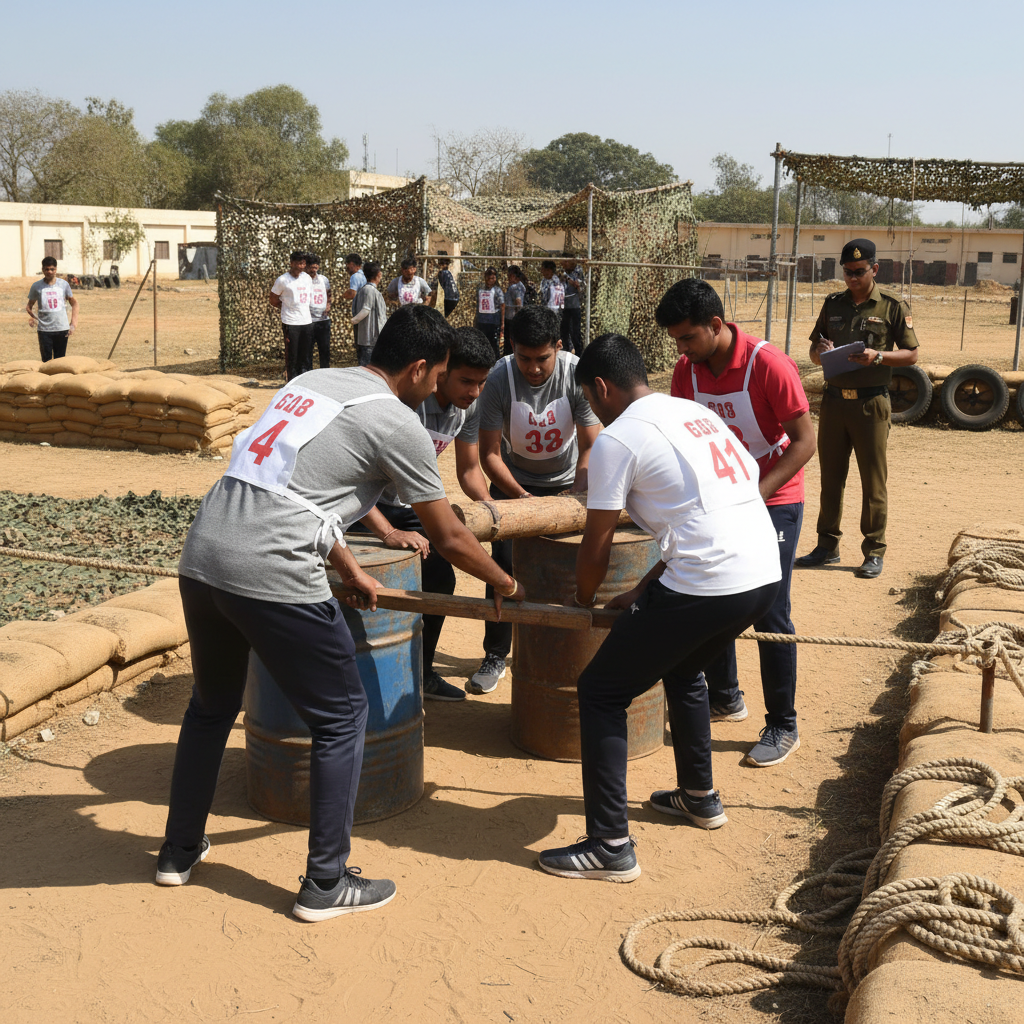
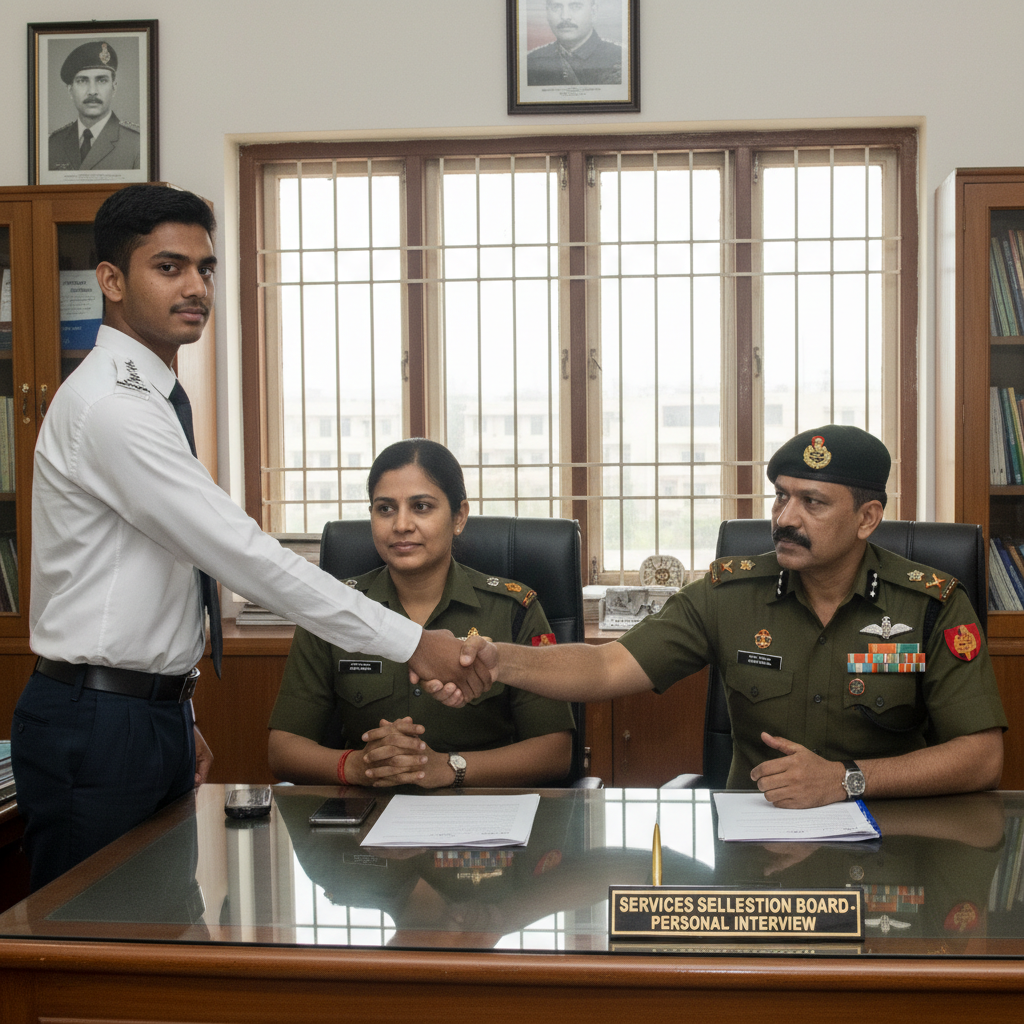
You’re reading this either because you’ve cleared NDA/CDS/AFCAT written exam, or you’re preparing to. Either way, the complete SSB interview preparation guide covers the full 5-day SSB experience — GTO outdoor tasks, group discussions, and personal interview strategies.
Psychology tests are one part of SSB. Your written exam score + psychology + GTO performance + personal interview = final recommendation. Master all four, and the uniform is yours.
🎖️ Join Defence Dreamers Academy for complete SSB psychology test coaching, mock tests, and one-on-one guidance from officers who have cleared SSB. Your journey to the uniform starts here.