
SSB Personal Interview 101: What Officers Assess, How They Evaluate Personality & 10 Winning Tactics
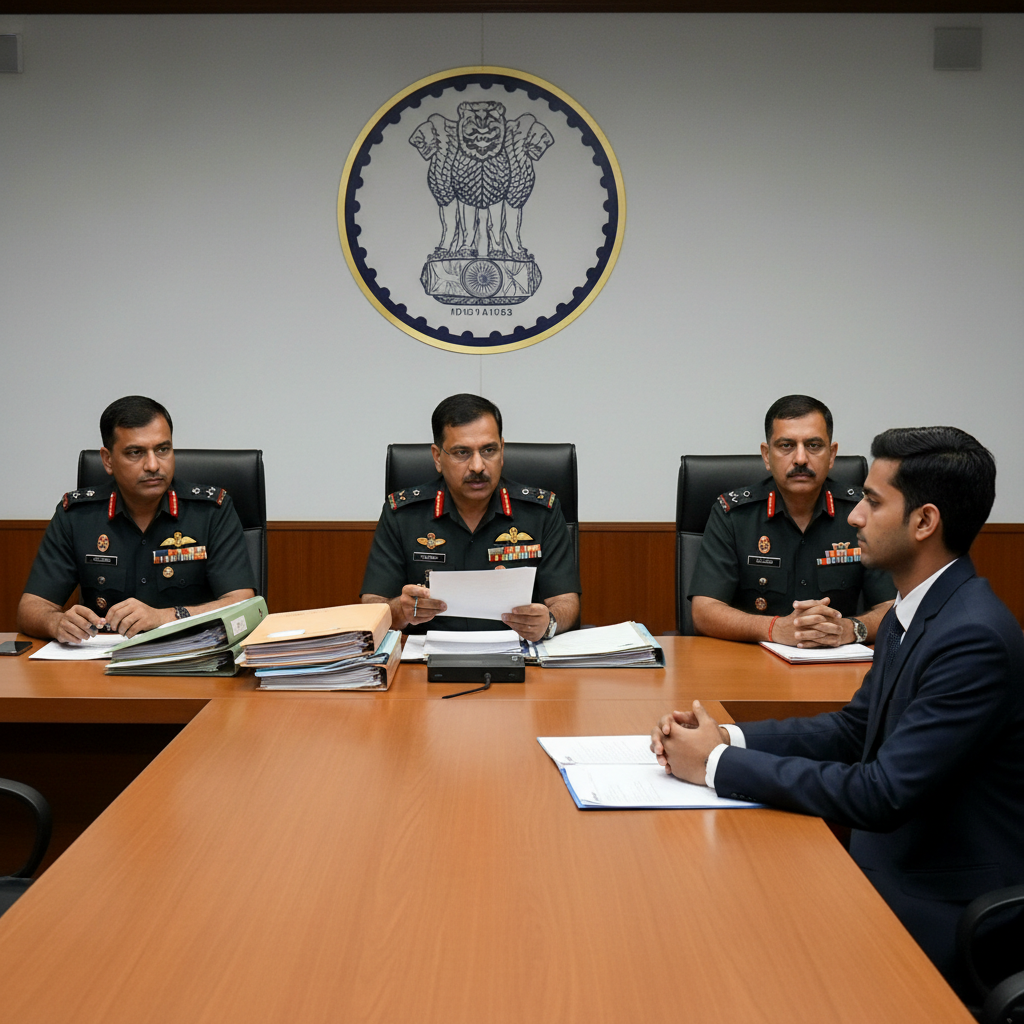
Quick Answer: The SSB Personal Interview is where a board of 1-4 officers evaluates your Officer-Like Qualities (OLQs) in 15-45 minutes. They assess leadership, communication, decision-making under pressure, moral character, and suitability for officer ranks. Success depends on self-awareness, honesty, and demonstrating maturity.
AI Search Summary
- What: Final stage of SSB after GTO tasks, where officers conduct one-on-one interviews to evaluate personality and officer potential
- When: Days 2-3 of SSB (typically 3:30-5:30 PM on final day)
- Duration: 15-45 minutes depending on board composition and performance
- How: Officers ask open-ended questions about background, motivations, challenges, decision-making; assess non-verbal cues, composure, clarity of thought
- Why: To separate genuine officer material from those with good written exam/GTO scores but lacking personality fit for military leadership
- Success Rate: 35-50% of candidates pass PI (varies by board strictness)
The SSB Personal Interview: What It Is & Why It Matters
The Personal Interview (PI) is the final psychological/personality evaluation stage of SSB. By the time you reach PI, you’ve already:
- ✅ Cleared the officer intelligence test (written)
- ✅ Performed in group discussions
- ✅ Completed outdoor group tasks (GTO)
- ✅ Done psychological tests (TAT, WAT, PPDT, SRT, SDT)
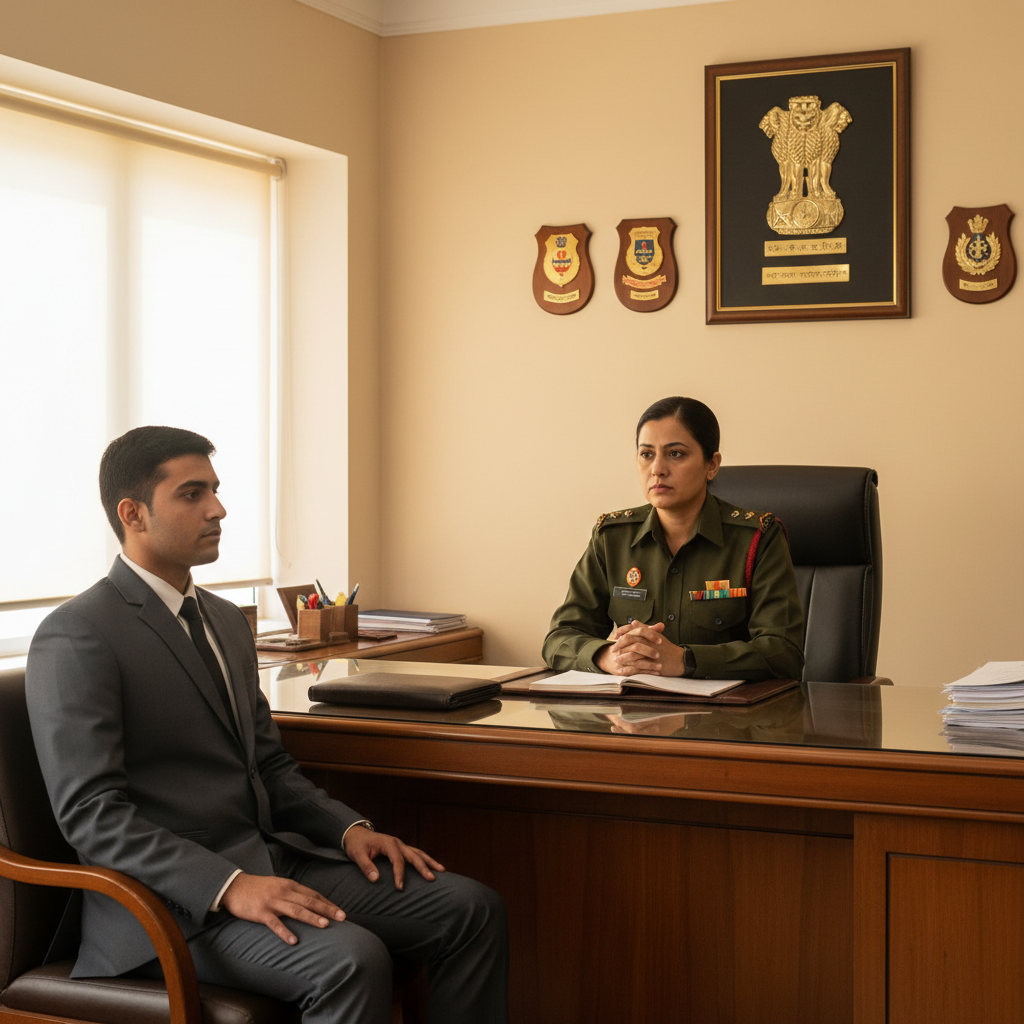
Now the board wants to meet YOU — face-to-face, one-on-one — to assess whether you have the character, judgment, and resilience required for military leadership.
This is the single most important stage because it’s the only moment where officers can evaluate your authentic personality, thinking process, and values. No tricks, no group hide-behind-others tactic. Just you vs. the board.
Who Conducts The Personal Interview?
| Role | Responsibility | Evaluation Focus |
|---|---|---|
| Interviewing Officer (IO) | Leads the interview, asks majority of questions | Communication clarity, decision-making, problem-solving |
| Psychologist | May ask probing questions, observes behavior | Psychological stability, stress handling, maturity |
| Ground Commander (GC) | May participate in some SSB centers | Physical resilience assessment, grit |
| Airmen Examiner (AE) | Conducts AI-specific interviews (AFCAT/flying branch) | Technical aptitude, spatial reasoning, situational awareness |
The 10 Officer-Like Qualities (OLQs) They Assess
During PI, officers evaluate you against these standardized leadership competencies:
1. Officer Qualities (General)
Do you behave with dignity, respect for hierarchy, and professional demeanor?
- Handshake firmness (not crushing, not limp)
- Eye contact consistency (not staring, not avoiding)
- Posture (sitting upright, not slouching)
- Speaking pace and volume (clear, confident, not shouting)
2. Leadership
Can you influence and guide others toward a goal?
- Examples of when you led a team/group
- How you handled team conflict
- Your vision for a project or responsibility
- Evidence of taking initiative (not waiting for permission)
3. Courage (Physical & Moral)
Do you face fear, risk, and difficult decisions head-on?
- Physical: Did you jump off the rope (group task)? Do you fear heights/water?
- Moral: Would you admit a mistake? Can you disagree respectfully with authority?
- Mental: How do you respond to failure or rejection?
4. Determination & Dedication
Are you committed to goals despite obstacles?
- Did you stay with a goal even when it was hard?
- How do you bounce back from setbacks?
- Examples of long-term commitment (sports, studies, hobby)
5. Integrity & Honesty
Do you act according to principles, even under pressure?
- Did you lie in your application or during tests? (Board can often tell)
- Would you compromise your values for personal gain?
- Honesty about weaknesses (more credible than claiming perfection)
6. Emotional Stability & Composure
How do you handle stress, criticism, and provocation?
- Did your voice shake or hands tremble?
- Did you get defensive when questioned?
- Could you think clearly under pressure?
7. Social Effectiveness & Adaptability
Can you work with diverse people and adjust to new situations?
- Examples of teamwork with different types of people
- How you adapted when plans changed
- Comfort with people from different backgrounds
8. Sound Judgment & Decision-Making
Do you think logically and weigh pros/cons before acting?
- Example of a tough decision you made
- How you gather information before deciding
- Acceptance of responsibility for your choices
9. Self-Awareness
Do you understand your strengths and weaknesses?
- Can you name 2-3 real weaknesses (not fake ones)?
- Do you recognize how your behavior affects others?
- Can you articulate your career goals clearly?
10. Patriotism & Service Motivation
Why do you genuinely want to serve in the military?
- Beyond “respect,” what specifically attracts you?
- Understanding of military challenges and sacrifices
- Personal reasons (family, values, challenges) rather than salary/status
Typical SSB Personal Interview Questions (Real Examples)
Opening Questions (Ice-breaker)
- “Tell me about yourself. Who are you?”
- “What did you have for breakfast?”
- “How was your journey to the SSB center?”
- “How are you feeling right now?”
💡 Trick: These seem casual, but assess confidence, clarity of speech, and whether you ramble or are concise.
Background & Motivation
- “Why do you want to join the military?”
- “When did you decide this was your career?”
- “What do your parents think about it?”
- “If you don’t get selected, what will you do?”
- “What do you know about the defence forces?”
💡 Trick: Avoid clichés like “respect the nation.” Show genuine research and personal connection (family, geographic posting, technical interest).
Personal Strengths & Weaknesses
- “What are your strengths?”
- “What are your weaknesses?”
- “How do you overcome your weaknesses?”
- “Name a time you failed. How did you handle it?”
💡 Trick: Weakness should be real, specific, and with solution. “I’m too perfectionist” is a cliché. Better: “I sometimes over-analyze decisions, which delays action. I’m learning to trust my judgment and move faster.”
Leadership & Teamwork
- “Tell me about a time you led a team.”
- “How did you handle someone who disagreed with you?”
- “Give an example of a team conflict. How did you resolve it?”
- “Do you prefer leading or following? Why?”
💡 Trick: Use STAR method (Situation-Task-Action-Result) to structure answers. Make it specific, not generic.
Pressure & Adversity
- “Describe your toughest moment in the last 2 years.”
- “How do you handle criticism?”
- “Tell me about your biggest disappointment.”
- “Would you follow an order you disagreed with?”
💡 Trick: Officers are testing moral courage here. Show you can handle pressure AND stick to principles.
GTO Performance (Probing)
- “Why did you jump / not jump the wall?”
- “What was the command task group’s strategy? Was it good?”
- “Did you contribute to the group task? How?”
- “What did you notice about other candidates?”
💡 Trick: They’re checking if you were aware, if you owned decisions, if you can self-assess objectively.
Situational / Ethical Questions
- “If a superior ordered you to do something unethical, what would you do?”
- “You see a friend cheating in exam. What’s your reaction?”
- “Your family needs money. Would you take a corrupt deal?”
- “How would you maintain morale in your unit during a tough deployment?”
💡 Trick: No “right answer” — they’re assessing your values and reasoning.
10 Winning Tactics for SSB Personal Interview
1. Prepare Your Personal Narrative
Before PI, write down a 2-3 minute summary:
- Who you are (background, family, hometown)
- Key achievements (academic, sports, leadership, social service)
- Why military service appeals to you (specific reasons)
- Your career goals (realistic, well-thought-out)
Practice saying this naturally (not memorized-sounding).
2. Be Brutally Honest
Officers can detect lies. If you’re unsure about something, say “I don’t know, but I can find out” rather than inventing answers.
- ✅ “I haven’t researched the INS Vikrant yet, but naval engineering interests me.”
- ❌ “Oh yes, I know all about it” (when you don’t).
3. Own Your Failures
Don’t blame others or make excuses. Show what you learned.
- ✅ “My board exam score was lower than expected. I realized I wasn’t studying smart. Now I use active recall and spaced repetition.”
- ❌ “The teacher didn’t teach well” or “The exam was unfair.”
4. Demonstrate Self-Awareness
Know your strengths and weaknesses. Be specific, not generic.
- ✅ Strength: “I’m good at logical problem-solving, as shown by my rank in the officer IQ test.”
- ✅ Weakness: “Sometimes I’m impatient with slow workers, but I’m learning to break tasks into steps and give people time.”
- ❌ “I’m a perfectionist” or “I’m too hardworking.”
5. Use Specific Examples (STAR Method)
Situation → Task → Action → Result
❌ “I’m a good leader.”
✅ “During school debate competition, our team wasn’t coordinating. [Situation] I took on the role of coordinator. [Task] I created a practice schedule, assigned research topics, and we met twice a week. [Action] We won the district championship. [Result]”
6. Show Genuine Motivation for Defence Service
Move beyond patriotism. Show specific reasons:
- “My grandfather was in the Navy. Seeing his discipline and commitment inspired me.”
- “I’m fascinated by aerospace engineering. IAF combines my passion with service.”
- “I want to be part of an organization where my actions directly protect people.”
7. Handle Disagreement Respectfully
If an officer questions your view, don’t get defensive. Show you can stand by your judgment while respecting authority.
Officer: “That’s a risky decision, don’t you think?”
✅ You: “I understand the risk, sir. I weighed it against the benefit of quick action in a time-sensitive situation. However, I respect your perspective and would welcome your input.”
8. Show Emotional Intelligence
React calmly, even if they provoke or challenge you.
- Don’t get angry if criticized.
- Don’t get overconfident if praised.
- Pause before answering difficult questions.
- Acknowledge emotions (“That comment stung, but I understand the point”).
9. Ask Thoughtful Questions Back
At the end, when they ask “Do you have any questions?” — ask 1-2 intelligent questions about training, postings, or the role. Don’t ask “What’s the salary?” or “Will I get home leave?”
✅ “Sir, what are the common postings for officers in the technical branch?”
❌ “Will I be posted in my hometown?”
10. Maintain Strong Non-Verbal Communication
- Handshake: Firm (not crushing), web-to-web contact, brief (2-3 seconds).
- Eye Contact: 60-70% of the interview (not constant staring).
- Posture: Sit upright, lean slightly forward (shows engagement), hands on lap or table.
- Facial Expression: Slight smile, responsive (not blank).
- Speech: Clear, moderate pace, appropriate volume, no filler words (“um,” “uh,” “like”).
Red Flags That Lead to Rejection
| Red Flag | Why It’s a Problem | Example |
|---|---|---|
| Dishonesty | Military demands trust. If you lie in interview, you can’t be trusted in the field. | Claiming to have sports achievements you don’t have; exaggerating qualifications. |
| Lack of Motivation | Officers need people who genuinely want to be there, not those chasing salary/status. | “I’ll join any service that accepts me” or “My parents want me to join.” |
| Blaming Others | Officers need people who take responsibility, not make excuses. | “My poor exam score was because the teacher was bad” or “My team failed because others didn’t listen.” |
| Arrogance | Military requires humility and willingness to learn. Overconfidence signals inflexibility. | “I know more than the senior officer” or dismissing other candidates as “below my level.” |
| Vagueness | Officers respect clarity and decisiveness. Vague answers signal weak thinking. | “Uh, I guess I like the military, maybe, I’m not sure” or rambling answers without conclusion. |
| Nervousness Overload | Military demands composure under pressure. Extreme nervousness (trembling, stuttering) signals weakness. | Hands shaking, voice cracking, unable to maintain eye contact. |
| Generic Answers | Officers want to know YOU, not a rehearsed script. | “I want to serve the nation” without any personal connection. |
SSB Personal Interview FAQs
Q1: How long is a typical Personal Interview?
A: 15-45 minutes. If the board likes you and wants to explore further, it goes longer. Shorter PIs sometimes indicate the board has already formed an opinion (positive or negative).
Q2: What if I don’t know the answer to a question?
A: Say “Sir, I don’t have immediate knowledge on that. But I can research it.” Better to admit ignorance than lie or ramble.
Q3: Can I ask for a break or water during PI?
A: Politely, yes. “Sir, may I have a moment?” or “May I have some water?” shows you’re human, not a robot. But minimize this — control your composure.
Q4: What should I wear to SSB?
A: Formal but not flashy. Full-sleeve shirt, formal trousers, closed-toe shoes, minimal jewelry. You’re showing respect for the process.
Q5: Will they ask about my GTO performance?
A: Very likely. Be honest about your contribution. If you didn’t perform well, show you learned from it or tried your best within your limits.
Q6: What if the board seems angry or stern?
A: Don’t panic. It’s a testing tactic. Maintain composure, speak clearly, and answer honestly. Sternness doesn’t mean rejection.
Q7: How much should I talk? Am I expected to give long answers?
A: Quality over quantity. Give complete answers (not one-word) but stay focused. 2-3 minutes per answer is usually good. If they want more, they’ll ask follow-ups.
Q8: What if I disagree with an officer’s viewpoint?
A: You can respectfully disagree. But frame it as “I see your point, sir. However, I also think…” Never be dismissive or argumentative.
Q9: Can I mention my medical or physical limitations in PI?
A: If it directly affects your service (e.g., old knee injury when applying for infantry), mention it honestly. Better in PI than failing medical later.
Q10: What percentage of candidates pass the Personal Interview?
A: 35-50%, depending on board strictness and year. Overall SSB success rate is 5-10%, so PI is a significant filter.
Key Takeaways
- ✅ The PI assesses your Officer-Like Qualities (OLQs) — leadership, integrity, courage, judgment, emotional stability.
- ✅ Honesty beats perfection. Real weaknesses with solutions are more credible than fake strengths.
- ✅ Specific examples (STAR method) are far more convincing than generic statements.
- ✅ Non-verbal communication (eye contact, posture, handshake) matters as much as words.
- ✅ Show genuine motivation for military service, not just salary or status.
- ✅ Maintain composure under pressure. Officers are testing your stress resilience.
- ✅ Take responsibility. Blame others and you’re done.
- ✅ Ask thoughtful questions back, but avoid asking about salary or comfort.
- ✅ Practice your personal narrative until it sounds natural, not scripted.
- ✅ Remember: Officers are not your enemies. They want to find officers who can lead, decide, and stay true to principles under fire.
What’s Next After SSB?
If you clear PI and all stages of SSB:
- Wait for final SSB result (usually 2-3 weeks post-interview).
- Medical examination (if you clear SSB).
- Documentation verification.
- Merit list publication.
- Service academy training (NDA/IMA/INA/AFA or OTA).
Conclusion
The SSB Personal Interview is your chance to show who you really are — not your exam score, not your group task performance, but your character, judgment, and suitability for officer ranks. Be honest about your strengths and weaknesses. Show genuine motivation. Demonstrate composure under pressure. Respect the process and the officers conducting it. And most importantly, be authentically you.
The military needs officers of integrity, courage, and wisdom. If you possess those qualities, let them shine through in your PI.
Want personalized SSB training? Explore Defence Dreamers Academy’s comprehensive SSB Interview Mastery Course — live coaching, mock interviews, and strategy sessions with successful SSB candidates.